
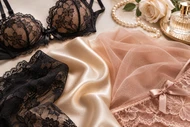
Compare lace, satin and mesh lingerie by texture, stretch, care needs and comfort to choose styles suited to your preferences.
Why fabric matters
Fabric affects how lingerie feels against skin, how it moves and how it should be washed. The best choice depends on your comfort, the garment construction and the occasion.
Lace
Lace offers pattern and texture, ranging from delicate decorative panels to more substantial stretch lace. Check whether the lace has a soft lining or touches the skin directly. Stretch lace often allows more movement, while rigid lace requires closer attention to sizing.
Satin
Satin describes a smooth, glossy weave rather than one specific fiber. Satin lingerie may be made from silk or synthetic fibers. It often feels sleek and drapes well, but stretch varies. Read the fabric label before deciding on fit or care.
Mesh
Mesh is lightweight and airy. Fine mesh panels may add transparency, flexibility and visual contrast. Some mesh fabrics stretch generously while others provide structure. Seams and edge finishes matter as much as the fabric itself.
Comfort and construction
Look beyond appearance. Check seams, elastic edges, lining, closures and any underwire. A soft fabric with an irritating seam still may not feel comfortable for extended wear.
Care basics
Follow the label. Many delicate pieces benefit from cool water, mild detergent and air drying. Use a lingerie wash bag when machine washing is permitted, and avoid rough fabrics or fasteners that might snag lace or mesh.
Choosing a style
Choose lace for textured detail, satin for a smooth finish, or mesh for lightness and layering. A garment blending two or three fabrics may offer the qualities you prefer.
